Edge AI: more than hype?
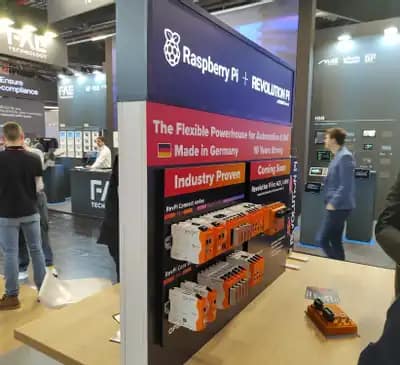
At the spring Embedded World event, Edge AI was impossible to miss. Our specialists Marko Saarinen and Juho Kokkonen share their views on whether it represents a genuine technological leap and what the technology requires.
What is Edge AI?
In simple terms, Edge AI means running AI algorithms directly on a device, such as a microcontroller or sensor, instead of sending the data to the cloud for processing. Neural networks themselves are not new, but today’s computing power has finally made local deployment possible.
Real technology beneath the marketing buzz
According to Marko and Juho, Edge AI was the number one theme at Embedded World. It appeared on almost every stand and in many presentations. Although the term was occasionally used rather randomly to dress up conventional solutions, many demonstrations were based on genuine, significant technological progress.
New-generation systems-on-chip and microcontrollers now include dedicated neural processing units, or NPUs, optimised for AI computation. Platforms such as Qualcomm Dragonwing and Nvidia Jetson can support more demanding Edge AI workloads.
“Ten years ago, there were already demonstrations of cameras recognising people, but they required enormous computing power. Today the same task can be performed by a small, low-power microcontroller. Technical advances have brought AI all the way to the grassroots level.”
Marko analyzes the progress.
Local speed, reliability and cost efficiency
Edge AI’s greatest strength is its ability to make decisions here and now. Processing data directly on the device eliminates delays that may be critical in robotics or high-speed quality control. Local processing also reduces bandwidth use and dependence on network connectivity. Devices can keep working in coverage gaps, industrial halls and mines. Keeping raw data on the device can also reduce the risk of data leaks, making Edge AI attractive in healthcare and safety-critical sectors.
“If the data does not need to be transmitted to the cloud for processing, latency is significantly lower when the processing is performed locally.”
Juho notes
It is also a question of sensible resource use. Continuously sending large quantities of data to the cloud is expensive and places a load on the network. Edge AI processes data locally and forwards only the relevant observations.
Development challenges and future hybrid models
Training neural networks is far more demanding than running them. Models are often embedded in device memory, making them more cumbersome to change or update than cloud models that can be trained continuously.
New infrastructure will be needed to update models in the field. One potential solution is a hybrid model, where some data is processed locally for a fast response and exceptional cases are sent to the cloud. These challenges mean that Edge AI solutions are still at an early stage in many industries, but it is clear that the field is taking a significant step forward.
Looking to the future with curiosity
Edge AI is not yet at the core of our customer projects, but understanding and learning about it is important. We are already looking forward to the first projects where the technology can be used. At Tickingbot, we will continue to deepen our expertise so that we are ready when the next smart device needs a developer.
“We simply need to find the right use case for it. The technology itself is incredibly impressive.”
Marko says enthusiastically